Overcoming Blind Spots!

Blind spots are behaviours and beliefs that we all develop in our lives. Information we encounter and our own life experience, helps us develop mental databases. Sometimes we are correct and sometimes we are flat out wrong about things. Whether right or wrong, very often it’s holding a belief very rigidly, that is the real thing limiting us.

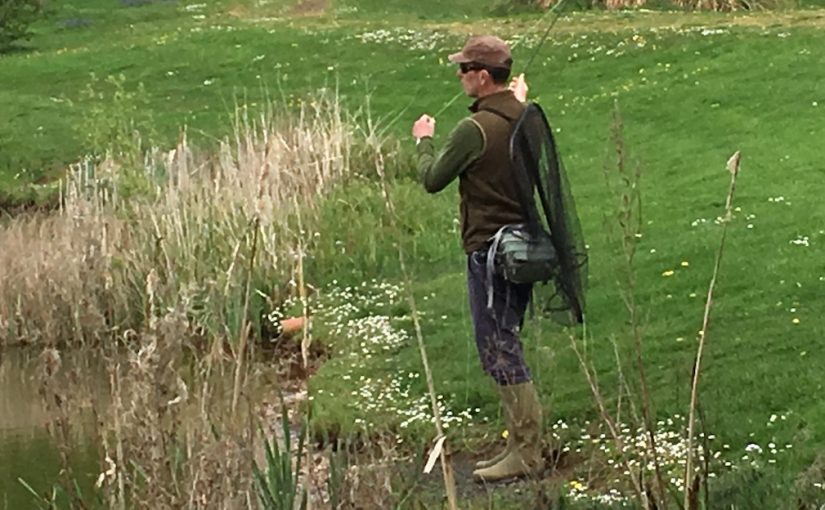
In my own experience of fly fishing, one of the limiting beliefs I had for several years, was that my fly casting was good enough. Sure, on some occasions that was true. On others, it was the biggest thing holding me back. Once I recognised and accepted that, I decided to do something about it. Actually that last sentence is not completely true! What had to happen was, I had to fail so badly, that it pushed me to become better. (For more on this checkout this post on fear setting for performance by Tim Ferriss. Then reflect on your fishing and perhaps other things too!) This ultimately resulted in a huge leap forward in my ability to catch and significantly improved my overall enjoyment of fly fishing.

Another very common blind spot I encounter in people, anglers and non anglers, is that fish are stupid! No doubt influenced to a large extent by widespread misinformation years ago of gold fish having a three second memory.

Is this belief influencing your approach to fly fishing? If so, you might find this post I wrote previously useful. (Bonus tip: – It’s worth reading anyway😉!)

During 2023 we launched a free online fly fishing assessment tool through our business Midlands Fly Fishing (MFF). The intention was and remains that this tool help fly fishers. So it’s free, the requirement to enter your email is ONLY so your results can be sent to you (MFF won’t spam you) and there is no obligation to book lessons (I would be very happy if you do though🙂). So what does this have to do with “blind spots”? Well, a number of people who used the tool contacted me to discuss coaching. In some cases their assessment answers to all but the last question suggested they were not achieving the outcome they should be, which seemed strange. When I worked with all of these people waterside or digitally, we found something they were or were not doing that negatively impacted there fly fishing.

In every case they were completely unaware of the action. A common example of this, was believing they observe the water to determine location of feeding fish and appropriate tactics to start a fishing session. In fact what they were doing, is setting up with what worked last time and going to a favourite spot to start fishing. Yes, the latter does work. However it was very different to their belief. Making a change here results over time in a huge positive change in angler success (e.g. increased catch regularity)!

Want to review your own fly fishing? Take this short free quiz to receive your own results and see where improvements to your fly fishing will have most impact.

Thanks for reading!

SY
Why Summer is Like Yo Sushi for Trout!

Fly fishers have long bemoaned summer time as “the dog days of trout fishing”. This need not be so!

I’ve written previously about issues of oxygen levels/water temperature, here I’m going to talk food. The bottom line is, summer is a time of plenty. This simple fact is often seen as a negative by fly fishers, fish are picky, satiated, lazy, it’s difficult, etc. However with a little thought, this can be quickly turned into a positive advantage for the fly fisher.

Firstly pick your water. Rivers and lakes at higher elevation are often cooler and food for trout is in shorter supply (generally speaking, there are exceptions). In these instances trout will be keen to make the most of any bounty in order to survive leaner times. Spring fed lakes and rivers are my other go to during summer. Yes, there will be lots of food for trout, but cooler temperatures see them feed well at key times and where the water is clear you can place your fly closer to feeding fish. Where the water is coloured, we can adopt other tactics to increase our chances.

Then pick your times. Early and late are classic times to fish during summer for good reason. There is no need to rewrite the rule book here. One addition I make however, is for lakes, morning is often better than evening these days. This is because the water is much cooler.

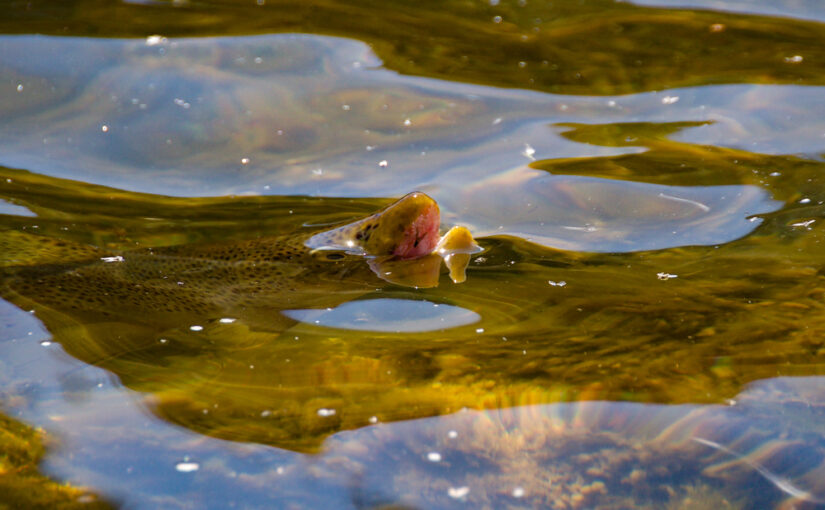
In all cases you are going to contend with huge amounts of natural food. If your fly is not right in the trouts feeding zone, it might as well not be in the water! Summer time is Yo Sushi for trout, the food is rolling along in front of them, to pick at as they like. Fishing in the right place at the right time turns the table to your advantage. Remember this and have fun!

Fly Fishing Observations from Coaching Groups

One of the fantastic benefits of working with groups of fly fishers, is I get to run experiments. Not on the anglers (in case you wondered) but to test situations which we collectively (I am at least as susceptible to this as anyone) might draw (and often do) the wrong conclusion. So if nothing else, to satisfy my inner lab rat, I started to monitor the findings. My results over 2 years on lake and river make some thought provoking reading.

There are times during the day and indeed year when little standout fish activity is visible. During such periods, having multiple people fishing means we can try different tactics to see what works. When one angler starts to receive takes in a group under such conditions, it’s very natural to conclude we’ve found “the” solution and switch everyone to that setup. If everyone is then successful, we can all pat ourselves on the back, thinking we cracked it, but have we? Equally, if no one else is successful after changing, then the angler who is successful just got lucky, but did they? The answer to both scenarios in most cases is no!

Why? In scenario 1 everyone enjoys success doing the same thing. It could be that fish started to feed after a dormant period, so everyone changing coincided with this. What I found is very often, keeping everyone fishing differently resulted in success too. How do I know? Sometimes we swapped to one technique then swapped back to check if there was a difference. We also did this in reverse sometimes.

In scenario 2 only the original successful angler catches, are they just lucky? Again the majority of the time no is the answer. Very often the “lucky” angler is the one fishing where the fish are! Remember rule number 1 is know where the active fish are.

A personal favourite scenario, one I fall foul of regularly is “selective feeding”. It’s super satisfying to observe what food is available and fish subsequently eating that food. Selecting a fly that we label as suggesting the same food item, we cast and are subsequently successful in catching a fish. Therefore that fish took our fly for X! Well sometimes it did and sometimes you could have thrown anything to it. With multiple anglers fishing the same situation using different flies and sometimes different techniques, most of the time fish take more than the option perceived to be selective.

What drops out from all this is, putting a fly that looks very generally like food where the fish want it, when they are active, will bring success most of the time if executed well. A very worthwhile strategy for anyone making the most of limited fishing time!

Best fishes

SJY

Getting Better

One of fly fishing’s great joys is it’s variety of opportunity. Even experienced fly fishers have more to learn. The key to recognising this is opening your mind. Once you accept that CONSISTENT success is not about luck, you are ready to move forward.

Each year I set a goal for my fly fishing, then put a plan in place to achieve it. This enables me to evolve both professionally and in my own fly fishing. The benefits to myself and my clients are huge and highly enjoyable. If this sounds like a business/career planning exercise, stay with me, it’s meant to, the structure effectively keeps me on track.

In my own fly fishing, nothing gives me a buzz like sight fishing. To visually locate, observe, stalk and capture a fish deliberately, induces an adrenaline rush to satisfy anyone. So for 2017 I set myself the goal of further improving in this area.

I’ve always been a self directed person, I like to find things out for myself. I learned much of my fishing knowledge through practical fishing experience, reading, watching video and listening to interviews. One day during my previous career, a very wise colleague (and mentor) advised me to “seek and learn from people better than myself” when looking to progress in any aspect of my life. This  I’ve always found hard to do. Not due to lack of opportunity, but because of me. When I have heeded this most precious advice, it’s produced amazing results in less time.

So my plan to achieve 2017’s goal also incorporated another challenge, enlist the help of someone I know to be the best within this field. The person for the task was an easy decision. I’d been learning from him since I was 6 years old, through magazine articles, books and video. The man I’m talking about is legendary fly fisher Peter Cockwill.

Having previously met Peter during a Trout Fisherman magazine feature, I felt a day spent learning from his vast experience (and their is not much in fly fishing Peter has not done and done successfully) would be simply awesome. As it turned out the hardest part was matching up our diaries!

Having just enjoyed that day in Peter’s company, I can say without a doubt I have gained from it. He pointed out a couple of areas where I could refine my approach and imparted an absolute gem of a tip for deceiving big trout. Yes, we caught fish, but the day was about much more than that. It was time spent with one of the sport’s gentlemen, who is an awesome angler and has the ability to pass on his knowledge.

Me, well I achieved part 1 of my 2017 goal, now I have to put what I’ve learned into practice!

Thanks for Reading

SJY

Experience – What Does This Mean?

It’s well over twenty years ago since I wrote a number of articles for various fly fishing magazines. At the time I’d been fly fishing sixteen years, enjoyed success on stillwaters and rivers, I thought I was rather good at this game.

Eight years later, I started guiding and instructing full time knowing a huge amount more than when I penned those articles. I also recognised their was much more to explore and  learn in fly fishing.

Now I know a phenomenal amount more than either of the above periods in my life. I also know I will never (thankfully) know it all, though that won’t stop me trying. You could say I’m “experienced”, but what does that mean?

The Oxford Dictionary describes it as: –

Experience – Actual observation of facts or events; activity or practice in doing something and skills or knowledge gained in this way. An event or activity that gives one experience.

Experienced – Having knowledge or skill gained from much experience.

Wondering where I’m going with this? OK, I get to hear many people use the term “experienced fly fisher”. This can, I’ve learned, mean many things. Typically, we use the term in reference to the number of years we (I do mean we, I can relate to this too) have fly fished.

This can be an error. Why?

Person one may have fly fished for ten years, only fishing six days each year. They may do the same thing every time they go, at the same places, not changing, adapting and only learning a small amount. Person two may have fly fished for ten years, fishing forty days each year. Trying new places, techniques, adapting to conditions and their observations better due to what is basically their greater experience.

Using time to describe experience suggests both these people are “experienced fly fishers”. In fact their respective knowledge and skill levels will be completely different.

What does this have to do with becoming a better fly fisher? Two things.

Firstly, once we get it in our heads we are “experienced fly fishers”, it’s easy to become resistant to change and block learning and development opportunities. If your opportunities to fly fish are similar to that of person one, you are more likely to fall foul of “Excessive Self Regard Tendency“.

Secondly, in order to gain maximum benefit from any instruction and/or guided fishing you take, be crystal clear with your instructor/guide when explaining your level of “experience”. I know it might feel daunting, however you will gain so much more if you open up fully. Trust me, I’ve been on both sides of the fence!

On group days I often here someone say “can I ask a stupid question?”. My response is typically “As long as it’s about fly fishing, their are no stupid questions. Many times in my life, I’ve felt stupid for not having asked a question I should have.”

Would you like a free online fly fishing check up? Use this tool to help you find out how you can make big improvements!

Enjoy the journey and thanks for reading!

SJY

Reflection

Reflection takes many forms. Light reflected from the waters surface, to reviewing your own fly fishing experiences, media (books, video, fishing logs, magazines, posts, etc.) is a tremendously powerful learning tool. It’s a method I have used for years and continue to. Reminding myself of information, ideas, and experiences forgotten with time, then reflecting on them with a different point of view.

Not only do we forget some gems of information, we look at things differently as our experience and knowledge grows. So when the weather is doing its best to keep you indoors this month (their are conditions when even I rather be inside than bank side), it’s an opportunity to review the season past and plan for the one ahead.

Two examples where I see this work very well are videos and practical tuition. Typically with a video the first viewing is largely entertainment. For informational videos a second and third viewing will be where you learn much more. Subsequent viewings after several weeks, months and a year gap then often enable you to see something new.

Similarly, every year I see clients who want a refresher or who opt to repeat a course simply because we don’t capture or retain all the information from a single session. It’s enjoyable and what you do learn will ultimately benefit your fly fishing. You see, longer term a review actually saves time/money, as you make much more of your fly fishing.

Bonus Tip: – Get even more from your own review by using AI to help you reflect on your fly fishing notes from season(s) past. Checkout this post on how you might go about doing this.

Let me know if this works for you.

SJY

By continuing to use the site, you agree to the use of cookies. more information

The cookie settings on this website are set to "allow cookies" to give you the best browsing experience possible. If you continue to use this website without changing your cookie settings or you click "Accept" below then you are consenting to this.

Close