In the Shade

Have you ever been outdoors on a day when the sun shines in a clear blue sky and does so relentlessly, to the extent that heat, humidity, become uncomfortable, unbearable? If so, did you seek shade? Did you feel the relief of being out of direct sunlight and it being just a little cooler, fresher?

My guess is, the vast majority of people will answer “yes” to the above. So don’t be surprised that fish, particularly cold water species e.g. trout do exactly the same!

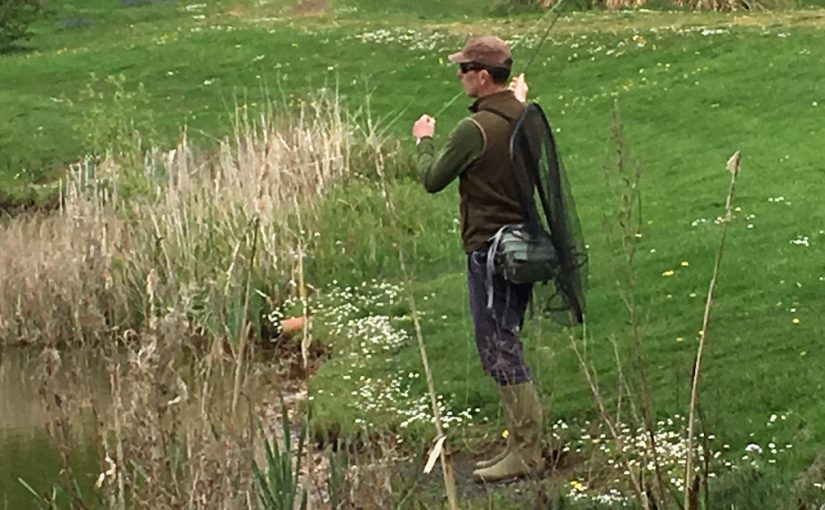
In the header image you can see me targeting holding water that remained in shade on a classic blue bird day. I’m also in a shaded area, more comfortable, yes, but that’s not the point. Being in a shaded area, close to the undergrowth and dressed appropriately, I’m less likely to be noticed, or at least tolerated a little longer, by the fish I’m targeting. This is a win/win situation.

Also read this post to help you sneak up on fish.

Thanks for reading!

Overcoming Blind Spots!

Blind spots are behaviours and beliefs that we all develop in our lives. Information we encounter and our own life experience, helps us develop mental databases. Sometimes we are correct and sometimes we are flat out wrong about things. Whether right or wrong, very often it’s holding a belief very rigidly, that is the real thing limiting us.

In my own experience of fly fishing, one of the limiting beliefs I had for several years, was that my fly casting was good enough. Sure, on some occasions that was true. On others, it was the biggest thing holding me back. Once I recognised and accepted that, I decided to do something about it. Actually that last sentence is not completely true! What had to happen was, I had to fail so badly, that it pushed me to become better. (For more on this checkout this post on fear setting for performance by Tim Ferriss. Then reflect on your fishing and perhaps other things too!) This ultimately resulted in a huge leap forward in my ability to catch and significantly improved my overall enjoyment of fly fishing.

Another very common blind spot I encounter in people, anglers and non anglers, is that fish are stupid! No doubt influenced to a large extent by widespread misinformation years ago of gold fish having a three second memory.

Is this belief influencing your approach to fly fishing? If so, you might find this post I wrote previously useful. (Bonus tip: – It’s worth reading anyway😉!)

During 2023 we launched a free online fly fishing assessment tool through our business Midlands Fly Fishing (MFF). The intention was and remains that this tool help fly fishers. So it’s free, the requirement to enter your email is ONLY so your results can be sent to you (MFF won’t spam you) and there is no obligation to book lessons (I would be very happy if you do though🙂). So what does this have to do with “blind spots”? Well, a number of people who used the tool contacted me to discuss coaching. In some cases their assessment answers to all but the last question suggested they were not achieving the outcome they should be, which seemed strange. When I worked with all of these people waterside or digitally, we found something they were or were not doing that negatively impacted there fly fishing.

In every case they were completely unaware of the action. A common example of this, was believing they observe the water to determine location of feeding fish and appropriate tactics to start a fishing session. In fact what they were doing, is setting up with what worked last time and going to a favourite spot to start fishing. Yes, the latter does work. However it was very different to their belief. Making a change here results over time in a huge positive change in angler success (e.g. increased catch regularity)!

Want to review your own fly fishing? Take this short free quiz to receive your own results and see where improvements to your fly fishing will have most impact.

Thanks for reading!

SY

Big Landing Nets

If landing nets don’t rate highly on your priority list of fly fishing gear and gadgets, let me ask you this one question. Have you ever felt intense pain at losing a big fish? Yes? Read on. No? Read on, you may yet be spared!😉

On average you are more likely to part company with large fish during the first and last ten seconds of battle. 8/10 losses in the last ten seconds result from nets being too small. Let’s look at two examples of this.

A few years ago a long time regular at Loynton Lakes had an ambition to catch a 20lb+ trout at the venue. He spent significant time and effort in this pursuit and I suggested to him that upgrading his landing net would enable the netting of his target fish, when the time came to go much better. Unfortunately, my words were not taken seriously until the person concerned hooked and lost his prize during attempted netting. What went wrong? Yes, you probably guessed, the net was too small for the fish! Following this experience the net deficiency was corrected. Late, yes. However there is a happy ending. He succeeded in landing not one but two rainbow trout exceeding 20 pounds in weight during seasons that followed and continues to own a big landing net.

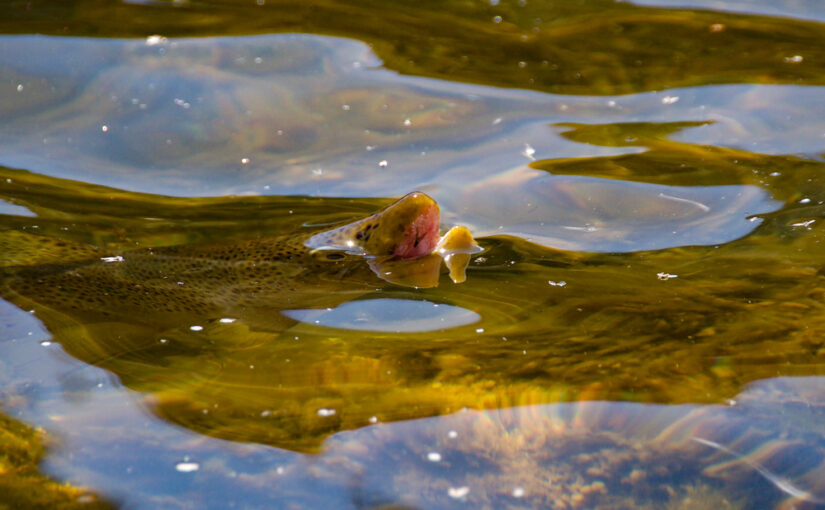
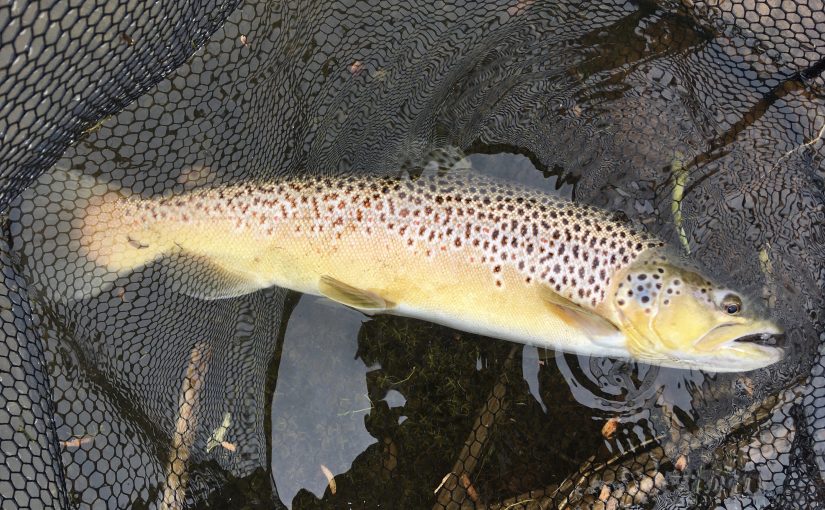
Mayfly time is renowned for luring large river trout to the surface and this year was no different. In the photograph above you can see a quality trout in my landing net recovering prior to release. This fish and several others had to be played very hard in confined space and netted quickly for a successful landing. Also better for fish survival. The net used and shown is a short handled salmon net, to give you some idea of scale. Using this for my own river trout fishing and guiding ensures I can always efficiently net fish myself and for my clients. While a typical pan style river net is fine for most fish, netting large fish is a struggle, why take the risk when eliminating it is so easy?

Large net’s also benefit fish welfare. More space means the chance of crushing vital organs is minimised, maximising survival rates for released trout. Finally, if you are concerned that a large net is less maneuverable? Remember, when netting fish, the fish should be brought to the net, not the other way around!

I hope this gives you some thoughts and ideas enabling you to land more big fish!

SJY

Why Summer is Like Yo Sushi for Trout!

Fly fishers have long bemoaned summer time as “the dog days of trout fishing”. This need not be so!

I’ve written previously about issues of oxygen levels/water temperature, here I’m going to talk food. The bottom line is, summer is a time of plenty. This simple fact is often seen as a negative by fly fishers, fish are picky, satiated, lazy, it’s difficult, etc. However with a little thought, this can be quickly turned into a positive advantage for the fly fisher.

Firstly pick your water. Rivers and lakes at higher elevation are often cooler and food for trout is in shorter supply (generally speaking, there are exceptions). In these instances trout will be keen to make the most of any bounty in order to survive leaner times. Spring fed lakes and rivers are my other go to during summer. Yes, there will be lots of food for trout, but cooler temperatures see them feed well at key times and where the water is clear you can place your fly closer to feeding fish. Where the water is coloured, we can adopt other tactics to increase our chances.

Then pick your times. Early and late are classic times to fish during summer for good reason. There is no need to rewrite the rule book here. One addition I make however, is for lakes, morning is often better than evening these days. This is because the water is much cooler.

In all cases you are going to contend with huge amounts of natural food. If your fly is not right in the trouts feeding zone, it might as well not be in the water! Summer time is Yo Sushi for trout, the food is rolling along in front of them, to pick at as they like. Fishing in the right place at the right time turns the table to your advantage. Remember this and have fun!

Custom fly rods – A case for having one!

While I think the quality of entry level/budget fly rods offers amazing value for money today, I’ve been questioning whether premium rods now offer fly fishers a good option or if your money is better spent elsewhere. Here’s what I think based on looking at choices from a mainly performance perspective, while allowing for the fact that nice stuff is well, nice!

Firstly, a new or inexperienced fly fisher rarely has the skill level to appreciate a premium, high performance fly rod. I remember hating them with a passion at one time, many were too stiff for the close quarter fishing I loved and still do. However the bottom line was, back then my casting was simply not good enough. It’s like learning to drive in an F1 car, only less lethal! Early days a budget level rod is more forgiving of our mistakes while providing adequate performance.

Beyond this however, we can appreciate the potential benefits offered by higher performance rods, for which we pay a higher price and rightly so. The question for me was, is it better to go with an “off the peg fly rod” or have a fly rod custom built?

I have accumulated a number of high spec fly rods (as you do) over many years, with the usual justification of wanting them for specific times, places, techniques, etc. Following my own advice of always try before you buy when it comes to fly rods at this level, I’ve been largely pleased with the results. When it comes to pricing, it’s like anything else in life, if you are happy to pay X for the rod and are pleased with your purchase, that’s all that matters. However, in some instances, we can have our cake and eat it!

With custom built fly rods, the fact you can have elements styled to your taste so it’s nice to own is certainly true. The big opportunity in having a rod made, one I’ve found hugely beneficial is in performance. The key here is in knowing what you want the rod for. When I was 18, I built a fly rod for fishing tiny overgrown brooks. Not long after, I had a pair of fly rods built specifically for reservoir boat fishing. More recently I’ve had the rod shown in the above photo built by Andy Banting. The general spec of this rod is a 9ft 5wt. Testing on the casting field shows it works well with lines of 4-7wt with the sweet spot in the 5-6wt range based upon line rating to the AFTM scale. This means it’s ideal for small to medium sized stillwater, while being perfect for casting larger dries and/or blustery days on the river.

I didn’t have this rod made as a general tool though, it was designed for stalking or sight fishing. Key for me was minimising rod flash, so the blank is matt, there is no flashy decoration or exuberant colours. I just want this rod not to be seen when fishing and we did everything to help it blend into the background. Blank performance was critical, quick and accurate with a soft tip make the perfect fishing tool in this instance for me. I can put the fly where I need to (most of the time), have the power to control and quickly subdue large trout, while having the cushioning effect to guard against that sudden out of the blue savage run. The handle is purpose made, nicely decorative, yet functional. You see I have shovels for hands, so the handle has been made thicker than you find on an off the peg rod. This makes it more comfortable for me to hold, over the course of a day it’s less fatiguing on my hand, this also helps keep my casting arm relaxed and is another huge win!

A significant number of clients I see for casting lessons exhibit what at first glance can be considered a fault, over powering a cast. However, this can also be what I’ve come to regard as a symptom. An angler hitting the cast too hard while having white knuckles on the casting hand is a classic sign that the grip is too tight and might be causing the over power issue. One cause of this is an inappropriate rod handle for the angler concerned. This is an under explored aspect of fly rods. To see the potential, look at what is done with golf clubs, it makes a difference when you get it right.

For any fly fisher wanting a special rod I say this. If you want a high performance rod as a general fishing tool, an off the peg rod might be your best option. For anyone who knows what they want or is willing and able to work with others to discover that, a custom built rod is undoubtedly your best option performance wise and you get to make it look nice for you too. Another bonus, having your cake and eating it saves you money against top off the peg rods with big brand marketing budgets!

If you are considering a custom rod, Andy Banting built “The Heron” (and it’s lighter 3wt cousin “Excalibur”) for me. You can look him up at Drew Fly Rods, where you will find images of rods he’s built, what he can do for you and contact details.

Interested in optimising your setup, casting or understanding what you need from a rod for your own fishing, drop me a line here.

Best Fishes

Steve

Fly Fishing Observations from Coaching Groups

One of the fantastic benefits of working with groups of fly fishers, is I get to run experiments. Not on the anglers (in case you wondered) but to test situations which we collectively (I am at least as susceptible to this as anyone) might draw (and often do) the wrong conclusion. So if nothing else, to satisfy my inner lab rat, I started to monitor the findings. My results over 2 years on lake and river make some thought provoking reading.

There are times during the day and indeed year when little standout fish activity is visible. During such periods, having multiple people fishing means we can try different tactics to see what works. When one angler starts to receive takes in a group under such conditions, it’s very natural to conclude we’ve found “the” solution and switch everyone to that setup. If everyone is then successful, we can all pat ourselves on the back, thinking we cracked it, but have we? Equally, if no one else is successful after changing, then the angler who is successful just got lucky, but did they? The answer to both scenarios in most cases is no!

Why? In scenario 1 everyone enjoys success doing the same thing. It could be that fish started to feed after a dormant period, so everyone changing coincided with this. What I found is very often, keeping everyone fishing differently resulted in success too. How do I know? Sometimes we swapped to one technique then swapped back to check if there was a difference. We also did this in reverse sometimes.

In scenario 2 only the original successful angler catches, are they just lucky? Again the majority of the time no is the answer. Very often the “lucky” angler is the one fishing where the fish are! Remember rule number 1 is know where the active fish are.

A personal favourite scenario, one I fall foul of regularly is “selective feeding”. It’s super satisfying to observe what food is available and fish subsequently eating that food. Selecting a fly that we label as suggesting the same food item, we cast and are subsequently successful in catching a fish. Therefore that fish took our fly for X! Well sometimes it did and sometimes you could have thrown anything to it. With multiple anglers fishing the same situation using different flies and sometimes different techniques, most of the time fish take more than the option perceived to be selective.

What drops out from all this is, putting a fly that looks very generally like food where the fish want it, when they are active, will bring success most of the time if executed well. A very worthwhile strategy for anyone making the most of limited fishing time!

Best fishes

SJY

Presentation – Part 2

In Part 1 we looked at the impact of presentation both +ve and -ve. Here we take a look at a key component of getting it right, using appropriate equipment setup for a given situation. While the core focus of the video below is leaders, we also show the importance of pairing the whole setup for maximum fishing efficiency and enjoyment using a number of common examples.

Note, while this video is filmed in a river situation, it is equally applicable to others. For example lake or saltwater and use of a double hand rod!

Thanks for reading.

SJY

Presentation Part 1

Presentation is a combination of actions that ends with your fly in the water. Correct execution means your fly is presented in a way that triggers a fish to bite it and enables you to detect this action. Conversely, poor presentation is more likely to result in a fish rejecting your fly OR the take not being detected.

The 3 videos below show fantastic examples of good and bad presentation, fish responses and fishing outcomes. I’ve included these clips to cover Salmon, Trout and Carp. This not only increases relevancy to more fly fishing situations, it also shows very clearly some major similarities across species and techniques.

21 seconds that could transform your fly fishing! See takes you never knew you had. A clip from Stillwater Fly Fishing, see vimeo.com/ondemand/stillwaterflyfishing

3 Fly Fishing Fundamentals for Success

Whenever you go fly fishing remember these 3 key fundamentals and it will, if executed correctly, help you transform your success.

  1. Know where the “active” fish are.
  2. Give the fish what they want, where they want, when they want it, without them knowing you did it.
  3. Know when the fish eats your fly and set the hook successfully.

Note by the term “active fish” I mean feeding/aggressive, highly likely to take. It makes no difference whether you are chasing feeding fish in fresh/saltwater, or non feeding migratory species. The 3 fly fishing fundamentals for success apply in all cases. Get it right and reap the rewards!

Have fun!

SJY

Fly Fishing Tech Hacks Part 3

If you have followed my posts here over time, you will probably realise that most of the time, on most water ways, fish are opportunistic feeders. Put another way, presenting a fly that looks edible, where they want it, when they want it, is a very successful strategy.

However, there are times, when the fly you present the fish with, is critical to them eating it. Often referred to as “selective feeding” the fish are focused on specific food forms or even stages of a given species (e.g. an emerger). It is now that answering the question “what are they eating?” is a must.

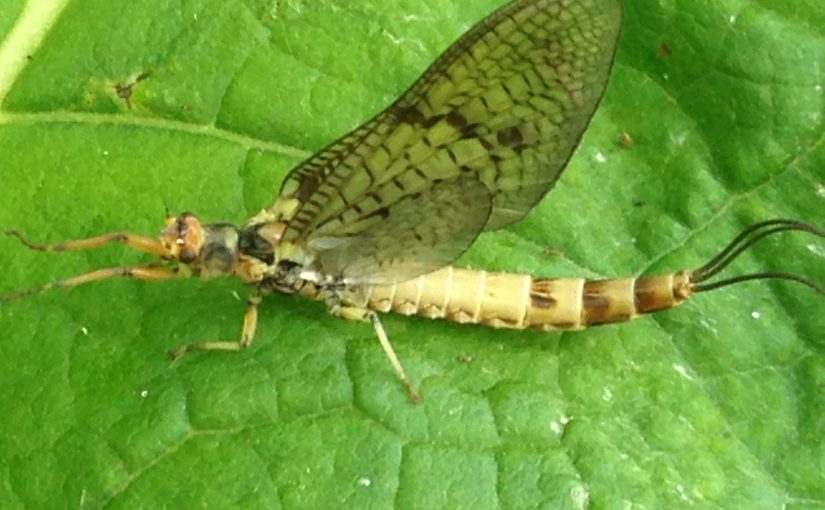
Enter Google Lens! This useful app allows you to identify things within an image. So the next time flies are hatching, fish are rising and your best attempts are ignored, try this little hack.

First collect, then photograph the fly with your phone. Second, use Google Lens to ID the fly. Third, perform a quick search for fly patterns to imitate the natural (if required). Search your fly box(es) for a suitable imitation, and commence your assault on the fish.

Is the app 100% correct on identification? No. It is however right more than wrong and often close enough even then. Like other AI applications, this will only get better with time and use. It’s a useful tool for short cutting your learning curve as you develop your own experience. Unlike the options covered in part 1 – creating your own database and part 2 – fish location tools, we are looking here at the minority of situations and a possible solution for when the going gets really tough.

Try it and see if it works for you!

SJY

Fly Fishing Tech Hacks Part 2

In the first part of this series, we looked at modern takes on fishing journals, how quick, easy and phenomenally useful these can be. If you’ve not read it, check it out here.

Here, in part 2, I’m going to suggest options you can use to update/improve fish location. This is possibly the single most powerful area of fishing you can improve. When you know where the feeding fish are, you can ensure your fly spends more time there. Net result, you will catch more fish!

Firstly, it’s become common place to use everyday software like google maps and google earth to find fishing venues. Then take a closer look at waters before you visit for the first time. Very often you can see some significant features that hold feeding fish before you ever visit. This is a tremendous asset, you have ideas of where to go before you leave home. Couple this with a quick search for up to date fishing reports and you are well on the way to a successful trip.

Once waterside you can find additional features (old school style) by looking into margins with polaroid sunglasses and also plumbing the depth. One way of doing this is casting a sinking line and counting how long it takes to reach bottom. You can also use you fly rod or a plumb line from a boat and make notes from viewing a venue in high and low water conditions over time. (Note you can use the modern journaling technique discussed in part 1 effectively for this too.)

The header image for this article is from my 1997 fishing journal (old school) and shows a sketch from a lake I fished a few times that year. It includes a number of key features I discovered, all of which appealed to feeding fish.

Today you can map water much faster and find many more features easily using a portable fish finder. Previously the must have gadget for boat anglers, they’ve been available for several years as a castable device that sends feedback directly to your phone. A real shortcut to the learning curve, so you become much more successful sooner.

It’s easy to knock the use of these devices, if you you feel that way about them, don’t use them. A recent experience I had proved interesting to me at least, this is what happened.

I was waterside with a client taking his first day of fly fishing. Another angler who knew me approached us, having enjoyed a successful morning. He was super enthusiastic about how much he had learned in very little time, after recently starting to use a castable fish/depth finder. What he used it for was to analyse areas where either he saw fish, caught fish or observed others catching. Nearly every time he located a holding feature. He felt that after fly fishing occasionally for over 30 years (self taught) he understood fish location and it’s importance.

I was delighted to hear this and congratulated him. As he walked away however my client asked if I felt cheated. After all I have spent decades building up layers of watercraft knowledge for many venues. He felt earning this the “hard way” would be better. My reply was and remains, we have numerous options of acquiring such knowledge and always have had. The other angler had waited 30 years to realise the most important function in fly fishing success, he deserves his new found knowledge and perhaps reflects on what might have been, had he found it earlier! The fact my clients choose to hire me is to shortcut the learning curve and make the most of limited time. The technology is just another tool in your box.

The fact we have more options now to choose from is a good thing. It means people can learn faster using methods that work for them. Most people do not choose to devote 10% of the time to fly fishing that guides and top anglers do. So being able to achieve reasonable success in limited time with technology aiding you can only be good, right?

Bowls of Jelly & Fish Spotting!

Wondering if I’m using dubious substances while writing this? That’s understandable from the title, the answer’s “no”, just stay with me, all will become clear, I promise.

Looking at this post’s header image, it’s likely you can see a fish. It’s also likely you recognise the fish to be a rainbow trout. (If not, take a closer look at the photo, see it now? Great, you just learned something!)

Now ask yourself why you see that fish? Very often the answer is, you see a fish because you are looking for a fish. This is classic “Prey Image Theory“, we know what the thing we are looking for looks like, so we look for that image. This is one of the key reasons why you miss seeing so many fish when looking into clear water!

Take this everyday life example that clearly shows the error.

bowls of jelly and fish spotting
Welcome to my fridge.

The story starts with me walking into the kitchen to make a drink. As I move towards our fridge, Andrea (my wife), casually mentions she made a black cherry jelly for fun earlier, its setting in the fridge. As I open the fridge door and look in, I grab the milk and look for the jelly, (see image above). I finish making my drink and do the typical husband thing, “hey Andrea, I don’t see that jelly in the fridge, where did you put it?” the response is the time honoured wife to dumb husband response, (Andrea walks briskly into kitchen, opens fridge door) “there, in the cups!”.

At this point we depart from the typical husband wife storyline, I experience a massive “light bulb” moment and we both burst into fits of laughter at me failing prey image theory, big time.

You see, in the fridge contents photo, what I saw, 4 nice cups that contained the delicious jelly. Once I knew the jelly was in cups, I saw jelly, before that, I saw cups, not jelly. The question is why?

The answer is because when I think of jelly, I think of a bowl of jelly! That’s how my mum and my nans’ all made jelly and how we often do too. So my prey image is a jelly bowl. I completely missed the jelly because I looked for a large jelly bowl and saw cups, among everything else. As soon as Andrea updated my prey image with information that she made the jelly in cups, I got it immediately.

What the heck does this have to do with fly fishing?

Well whenever you go looking for fish with an image of that species held consciously/subconsciously in your head, you make that same error again and again and again.

In fact you make that error continuously and will do forever, or you do something about it and correct the error!

How? Stop looking for a fish! Instead, look for signs. If you look, you will see. Just like Derek.

Have fun

SJY

Performance

As a regular or new visitor to this blog, you may have noticed the subheading reads “Performance Fly Fishing”? You would I hope, agree, after reading a few posts, the overall objective here is to help raise your fly fishing performance.

For some reason that I find astonishing, it’s taken until now for me to write a post specifically on performance. So as it’s taken this long, let’s get on with it!

I often extoll the benefits of practice. It has a very strong role to play in improving performance. You can find some great pointers on this here!

However I am going to return to the areas of mindset and perception now. They have a huge influence on the outcome of any fishing trip. For example, it is often said how beneficial a day’s fishing is. Relaxing, restorative, healing, are all words regularly used to describe a day on the water. They are also words associated with feeling tired, run down, sick. Not situations in which we are likely to perform at our best.

So in the above scenario we feel good post fishing trip (which is important and a good thing), yet we likely did not fish as well as we could have. People tell me everyday, “It does not matter if I don’t catch fish” or “just being here is enough, catching is a bonus”. Sometimes they do mean what they say, most of the time they don’t. If they did there would be no one moaning about not catching on internet forums and social media groups! I would also be redundant.

This post on the other hand comes at fly fishing performance from a proactive perspective. I even say “If this sounds like a business/career planning exercise,…”. It’s been 2 years since I wrote that post as I write now. In that time I have immersed myself further in using common traits of “elite performance” taken from many fields, and applied it to fly fishing.

This has taken my own fly fishing to new levels of what I personally want to achieve. I’ve also used it to make me a better guide, coach, instructor, mentor, and hence provide a better service to my clients too.

Understandably, not everyone wants to take their fly fishing this far. That’s fine. However, applying principles used everyday in many sports and business to your fly fishing, will bring you so much more than just catching fish. Trust me, thousands of people have!

Have Fun

SJY

Three Great Dry Flies

It’s been a while since my last post which is lazy on my part. To make up for it, I’m sharing 3 classic dry flies which are particularly productive for us right now (mid Spring). They are highly effective throughout the season during hatches and often outside hatch periods.

Enjoy the videos below and be sure to read my notes at the end of this post. I give you the Parachute Adams, F Fly and Shuttlecock!

All three of these flies are well known, standard patterns if you like. The key is not to simply tie them as shown in the 3 videos above or for that matter in any other videos.

Instead, tie them so they remain the immensely successful, general representations of fly life they are, while making them sufficiently different to say eat me instead of run away. Essential when a fish has seen the standard fly many time previously!

Enjoy.

SJY

Getting it Wrong!

Somewhere in the image above is a trout, a very big rainbow trout to be exact! Where, I don’t know. Here’s why.

I am standing on a small point jutting out into the lake, looking right into a small reed fringed bay. Through the clear water, I spot a large rainbow trout, cruising between weed beds in search of prey. Suddenly its mouth opens, there is a huge flash of white underwater, as a nymph is inhaled into a cavernous mouth.

By now I am stepping towards the fish, anticipating it’s cruise path as I move. At the same time, my eyes remain glued to the fish, I know it’s vital to maintain visual contact. I unhitch the fly, begin stripping line from the reel so I can deliver my cast accurately and quickly once in position.

Ready to cast? No. The damn fly line has wrapped over the rod 3-4 times (see photo, you may need to zoom in to the rod tip). This is normally rectified by rotating the fly rod. However I can see via my peripheral vision that the line won’t completely free. I reach forward to free the line, still focusing on the fish. You must be kidding me, the line won’t free!

I take the gamble, looking away from the fish for perhaps 2 seconds while I focus on the rod/line and resolve the tangle. I know the risk involved in doing this, when you look back you may not be able to see the fish. However I’ve tried everything else to free the line and it’s this or nothing!

Line free, I look back to the fish. It’s not there! I scan the water, I don’t see it. I expand my search, still nothing. I focus deeper in the water, nothing. I wait patiently for the fish to return, big trout often cruise a beat repeatedly, I’ll get another chance I tell myself. 20, 30, 40 minutes nothing. I move on, calling back multiple times during the day, nothing.

Sometimes the smallest error makes a huge difference. In this case the difference was a high percentage chance of catching a stunningly marked double figure rainbow trout and not doing so. For me nothing fundamentally new was learned here, I just reinforced that something I already knew was indeed correct!

I hope this helps you land that trophy fish rather than endure the pain of lost opportunity!

Thanks for reading.

SJY

A Tale of Two Paths

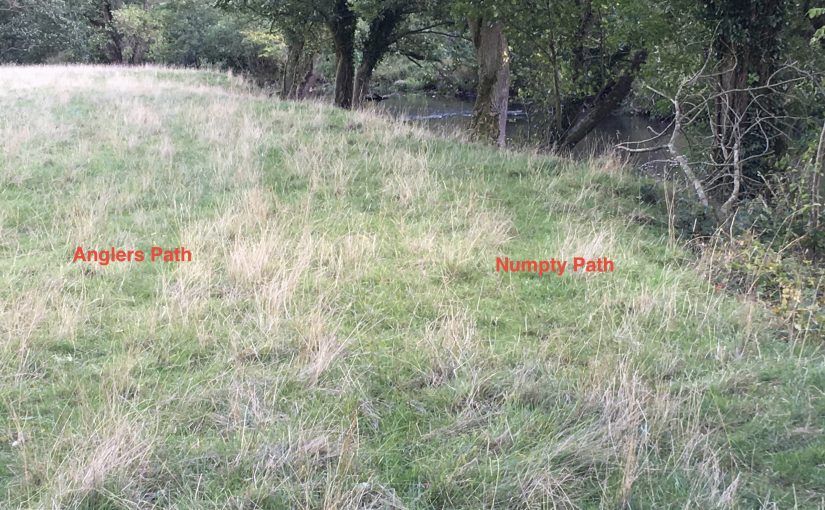
The paths we choose in life have a major impact on everything we do. This remains exactly the same when we go fly fishing. Take a look beside most popular rivers and over the course of a season, two distinct paths form year in year out as shown in the image above.

When viewed like this, it’s easy to see that moving up and down a river via the “Anglers Path” results in you catching more fish. Taking “The Numpty Path” ensures you spook the majority of your quarry before ever unhitching a fly from the keeper ring!

However, their are times when taking the numpty path can be forgiven: –

  • You just don’t know about this. (You do now!)
  • Taking a position on the numpty path stealthily to observe or fish from.
  • Scouting a piece of water you are unfamiliar with and not planning to fish immediately.

When we find ourselves behaving similar to the points below (and we all do sometime(s)), it’s time to laugh, chill out and learn: –

  • We get over excited and go charging along the river looking for a “big un”! Typical of early season, a special trip or anytime you’ve not fished for a while. Overcoming this tendency will help you hugely make your precious, limited fishing time more productive.
  • We become too focused, it starts meaning far too much and the net result is we get clumsy and make mistakes like getting too close.

Finally not taking into account other anglers and walking too close, impacting their fishing. The odd accidental stumble across an unseen comrade is allowed providing an immediate and honest apology is made. Continual uncaring stomping along the bank with no consideration for others, means you are a complete numpty! Sort yourself out.

Thanks for reading!

SJY

Proof of the Pudding…

It’s the middle of Mayfly time here as I type, life is wonderfully hectic and I thought I’d share this image with you.

If you’ve read my thoughts on celebrating mayfly time as perhaps the best opportunity to catch trophy trout on dry flies, this photo encapsulates those musings and is “proof of the pudding”!

As usual however, it’s not all plain sailing. Many waters are experiencing mayfly hatches later than average this year, probably due to a colder than normal spring  suppressing water temperature. As a result, being adaptable waterside has proved valuable as is so often the case.

Thanks for reading and tight lines.

SJY

Buzzer Fishing Tips

Buzzers or midge pupae are active in most freshwater most of the year. However, mid to late spring sees some of the most prolific hatches and feeding activity, certainly for stillwaters. The great news for anglers is, most of this bonanza is relatively large in size 12-14 hook size. For much of the year naturals are significantly smaller.

While there are many patterns available to suggest the naturals in various stages, it’s also worth having something a bit different for when it’s needed. Check this short video out for fly tying ideas and clues on how you might fish your fly better!

Thanks for reading!

SJY

Hot Flies, Strawberries & Cream!

Throughout childhood, my Grandad told stories of his own fishing exploits. Some of these were classic fisherman’s tales, to tease me. Such tales usually resulted in a monster being caught, the magic formula? Strawberries and cream!

Being completely obsessed with all things fishing, I read everything I could lay my hands on when not waterside. So, when reading a number of carp fishing articles in the 1980’s, I was astonished to see huge fish caught on strawberries and cream boilies. I thought, maybe gramps was not winding me up after all!

So where am I going with this and what does it have to do with fly fishing?

The well publicised captures of these carp, caught on strawberry and cream flavoured boiled baits, resulted in many carp anglers using this bait for quite some time.

When the latest hot fly pattern is broadcast in the fly fishing media, exactly the same thing happens.

The irony is however, when everyone uses the same fly/bait, it rapidly becomes a lot less effective. Typically, the people who used it originally, did so to offer the fish something different, to get an edge. Once it becomes the norm, that edge is lost.

Very often by the time most anglers hear about a hot fly pattern, the originators have already moved on to something else!

Think about that, it might just come in handy!

Thanks for reading.

SJY

Mayfly – An Alternative View

Here in the UK, May/June is when everyone wants to go fly fishing. Depending on where you are in the country, a very special hatch takes place, a fly referred to specifically as, “The Mayfly”. This would be comparable to the Hexagenia hatch in the USA.

Mayfly are big in comparison to most other flies available to trout during the season. This results in abundant hatches lifting many trout to the surface to feed. An epic feast, a dream for dry fly fishing enthusiasts the world over, easy fishing, duffers fortnight they call it!

SO what’s alternative about the above? Nothing, I’m just setting the scene, this is mass perception and it’s wrong!

During the Mayfly hatch period for a water, their  maybe a golden period when trout have really started feeding aggressively on them. Duns hatch in abundance and a relatively small number of anglers have fished the many artificial flies suggesting  mayflies. This is the easy fishing, it does not last long and it’s random luck if you are there when it happens. So, make the most of it!

Going fly fishing at Mayfly time with the expectations of the above paragraph, sets you up for disappointment. By simply adjusting your perception you will enjoy your fly fishing more and catch more fish with time (Note – if you did not just click the link to associated article, I suggest doing so now, you will get far more out of this).

Another point that has bugged me for a couple of years is why call Mayfly “duffers fortnight”? If it sets people up to have a bad time rather than a good time, they won’t comeback. Any argument that fishing is easy, is a poor one.

Further more, I don’t find the term duffers fortnight particularly inspiring . A bit of a PR disaster at a time when every angling body in the country is attempting to boost participation.

See my point? A more inspiring approach both personally and professionally is to think of the mayfly hatch as the best time to catch the trout your life on a dry fly!

Now that sounds like an exciting, interesting, yet achievable challenge to me. After all, why do we go fly fishing if not to challenge ourselves to some degree? If you just wanted to catch a fish, you would fish bait.

Thanks for reading.

SJY

By continuing to use the site, you agree to the use of cookies. more information

The cookie settings on this website are set to "allow cookies" to give you the best browsing experience possible. If you continue to use this website without changing your cookie settings or you click "Accept" below then you are consenting to this.

Close