Ask me what really excites me about going fly fishing and I will respond with the term visual fly fishing. Asked to expand on this, I’ll say observation of the water, surrounding environment and conditions to locate feeding fish, stalk a selected fish I want to catch, then watch it eat my fly. That’s what does it for me!
So when I read “Chalkstream Chronicle” by Neil Patterson in my early twenties (an excellent book for many reasons including, highly entertaining and far from just a book for the chalk stream fisher), a chapter that shares the same title as this post stuck in my mind.You don’t need an actual shooting stick of course, just take up a position that gives you a great view over a good length of water best described as fishy (your watercraft tells you this), make yourself as unobtrusive as possible, then simply wait and watch. The longer you do this for, the more you see.
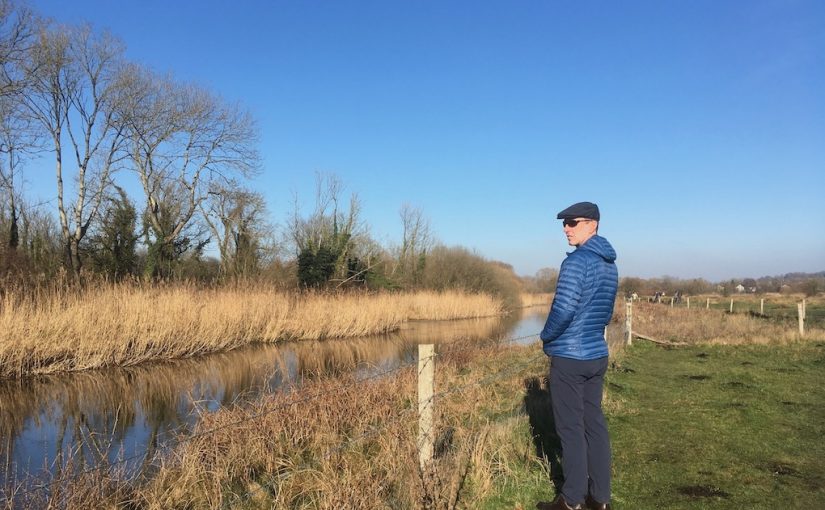
The above image shows me doing exactly this during a winter walk with my wife. I’m not exactly camouflaged, however I was warm, enjoying winter sunshine, fresh air and being close to water. We took our post lunch river walk to coincide with the best chance of a sparse olive hatch that might just get a fish or two to rise, even on a cold day in early February. All parties obliged and by waiting and watching over this long, flat glide, we identified the holding spots for some fine trout and grayling. All this is now logged for future use and it was fun to practice for the season to come.
Of course, on most waters there are many days when you see no sign of a fish and search tactics make sense. However, when feeding fish do offer clues to their whereabouts and what they may accept from us fly fishers, a shooting stick approach is generally more productive. Indeed if you found my initial paragraph of this post intriguing, you will probably derive far more fun from employing this tactic too.
Why not try a shooting stick philosophy this season? Have fun and let me know how you get on.
Best Fishes
SJY